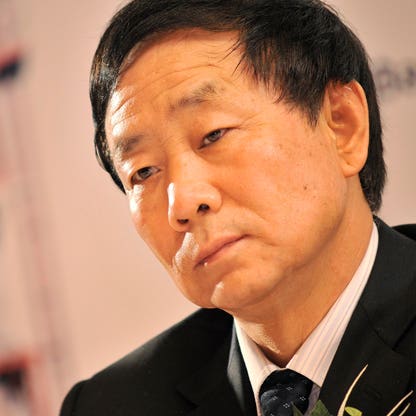
Li Liufa's Net Worth: From Fertilizer Worker to Billion-Dollar Empire
The narrative of Li Liufa is a compelling testament to the spirit of self-made success, characteristic of China's economic boom over the past few decades. From the humble confines of a fertilizer factory to helming a multi-billion dollar conglomerate, Li Liufa's journey is an inspiring saga of vision, perseverance, and strategic diversification. Today, his remarkable achievements place his estimated
li liufa net worth at approximately $2.1 billion, a figure that underscores the sheer scale of the empire he painstakingly built.
Li Liufa is not merely a businessman; he is an industrialist who has profoundly shaped sectors critical to China's development. His Tianrui Group, a diversified powerhouse, boasts significant interests spanning steel, cement, tourism, minerals, and aluminum. This extensive portfolio not only highlights his business acumen but also provides a robust foundation for his considerable wealth. Born on June 1, 1957, Li Liufa, at 68 years old, continues to steer his enterprises from his residence in Ruzhou, Henan, China, embodying the dynamic entrepreneurial spirit that has transformed the nation.
The Genesis of an Empire: From Fertilizer to Foundries
Li Liufa’s origin story is far removed from the opulent boardrooms he now frequents. His professional life began in the late 1970s, working diligently at a fertilizer factory in Henan Province. This period, characterized by China’s nascent economic reforms, was a crucible for many future tycoons. It instilled in him a grounded understanding of industrial processes and the value of hard work.
The transition from a fertilizer worker to an entrepreneur was a pivotal moment. With an innate entrepreneurial drive, Li Liufa decided to forge his own path. He embarked on his first independent venture by establishing a small steel casting factory. This initial foray into metal processing, a seemingly modest undertaking, was the critical first step towards what would become a sprawling industrial empire. This period often saw entrepreneurs starting with minimal capital, relying heavily on ingenuity and relentless effort. Li Liufa's ability to identify a market need, coupled with the courage to act on it, laid the groundwork for his future success.
This early venture, sometimes referenced as a small metal processing workshop, gradually expanded its operations. It was here that his fundamental understanding of the steel industry began to deepen, allowing him to navigate the complexities of production, supply chains, and market demands. For those aspiring to build a business, Li Liufa's early career offers a crucial lesson:
start small, but think big. His ability to scale from a single casting factory to a significant regional player like Henan Yaxing Steel, which produced a range of steel products vital for construction and manufacturing, demonstrates a masterful progression.
Forging a Diversified Conglomerate: The Tianrui Group's Ascendance
The growth of Li Liufa's operations didn't stop at steel. Recognizing the cyclical nature of any single industry and the vast opportunities presented by China's rapidly developing economy, he strategically diversified his portfolio. This approach led to the formation and expansion of the Tianrui Group (and closely related entities like Henan Liufa Group), transforming it into the multi-faceted conglomerate it is today.
The Tianrui Group's diversification strategy is a textbook example of how to build resilience and expand market reach. By investing in seemingly disparate yet fundamentally linked sectors, Li Liufa created a synergistic ecosystem. For instance, the demand for steel directly impacts the demand for cement in construction, and the extraction of minerals supports both. His company’s interests now include:
*
Steel: Remaining a core business, producing essential materials for infrastructure and manufacturing.
*
Cement: A vital component in China's massive construction projects, from urban development to high-speed railways.
*
Tourism: Capitalizing on China's growing domestic tourism market and disposable incomes.
*
Minerals & Aluminum: Supplying raw materials and processed goods critical for various industries.
This strategic expansion was not without its challenges, but Li Liufa’s astute leadership ensured continued growth. By 2013, the company's revenue had soared to over $1.7 billion, a clear indicator of its significant market presence and operational efficiency. A testament to its industrial prowess, Tianrui Group counts China's railway ministry among its key customers, highlighting its integral role in national development projects. The ability to secure such large-scale government contracts speaks volumes about the group's reliability, quality, and capacity. For a deeper dive into his strategic moves, explore
The Li Liufa Story: Building China's Diversified Tianrui Group.
The Pillars of Wealth: Understanding Li Liufa's Net Worth
Understanding the depth of
li liufa net worth requires an examination of the assets, market valuations, and strategic positioning of his various enterprises. His fortune, estimated around $2.1 billion, is primarily derived from his substantial ownership in the Tianrui Group and its subsidiaries. The valuation of such a diversified conglomerate considers multiple factors:
*
Market Capitalization of Publicly Traded Entities: While specific public listings might fluctuate, the overall market value of his controlling stakes in various companies forms the bedrock of his wealth.
*
Asset Holdings: This includes vast industrial facilities, mines, tourist resorts, and real estate properties owned by the group. The tangible assets alone represent significant value.
*
Revenue and Profitability: Consistent high revenues (like the $1.7 billion reported in 2013) and healthy profit margins across multiple sectors demonstrate the financial strength and operational efficiency of his companies.
*
Strategic Importance: Companies that provide critical materials for national infrastructure (like steel and cement for railways) often hold strategic value that translates into robust business performance and valuation.
Beyond direct business assets, Li Liufa's personal wealth also reflects his personal investments and holdings. His decision to pursue an EMBA from Peking University later in his career is another interesting facet, suggesting a commitment to continuous learning and professional development even after achieving significant success. This higher education likely equipped him with advanced management techniques and a broader economic perspective, further refining his business strategies. For a comprehensive overview of his business segments and their contribution to his wealth, consider reading
Li Liufa's Business Empire: Steel, Cement, Tourism & Net Worth.
What can be gleaned from Li Liufa's journey is the powerful combination of hard work, strategic foresight, and an unwavering commitment to growth. His story underscores that true wealth accumulation often involves:
1.
Identifying fundamental needs: Steel and cement are always in demand for development.
2.
Strategic diversification: Spreading risk and capitalizing on varied market opportunities.
3.
Scaling operations effectively: Growing from a small workshop to a multi-billion dollar enterprise.
4.
Long-term vision: Building an empire takes decades of consistent effort and strategic planning.
Legacy, Leadership, and the Future of the Tianrui Group
Li Liufa’s influence extends beyond his personal wealth; he has built a lasting legacy through job creation, industrial development, and his role as a prominent Chinese industrialist. His leadership style, undoubtedly forged in the demanding environment of early Chinese industry, combines resilience with strategic aggression.
A key aspect of his legacy is the involvement of his family in the business. Li Liufa shares ownership of the Tianrui Group with his son, Li Xuanyu. This indicates a clear succession plan and the transition of leadership and ownership within the family, a common practice among large Chinese conglomerates. Such continuity is crucial for maintaining the long-term vision and stability of a vast business empire. The integration of the next generation ensures that the values and strategic direction established by Li Liufa will continue to guide the group.
As China's economy continues to evolve, facing new challenges and opportunities, the Tianrui Group under Li Liufa's ultimate guidance (and potentially his son's increasing involvement) will undoubtedly adapt. The focus on essential industries like steel, cement, and minerals provides a foundational stability, while diversification into areas like tourism offers avenues for growth driven by domestic consumption. The group's ability to innovate and respond to market dynamics will be key to sustaining its growth and ensuring that Li Liufa's net worth continues to reflect the strength and scale of his billion-dollar empire.
Conclusion
Li Liufa's journey from a fertilizer factory worker to a billionaire industrialist with an estimated
li liufa net worth of $2.1 billion is a powerful narrative of ambition and execution. His Tianrui Group stands as a monument to his strategic vision, having successfully diversified across critical sectors like steel, cement, tourism, minerals, and aluminum. Through dedication, smart diversification, and an unwavering commitment to growth, Li Liufa has not only accumulated immense personal wealth but also played a significant role in China's industrial development. His story serves as a profound inspiration, demonstrating that with strategic planning and relentless effort, it is indeed possible to build a multi-billion dollar empire from the most unassuming beginnings.